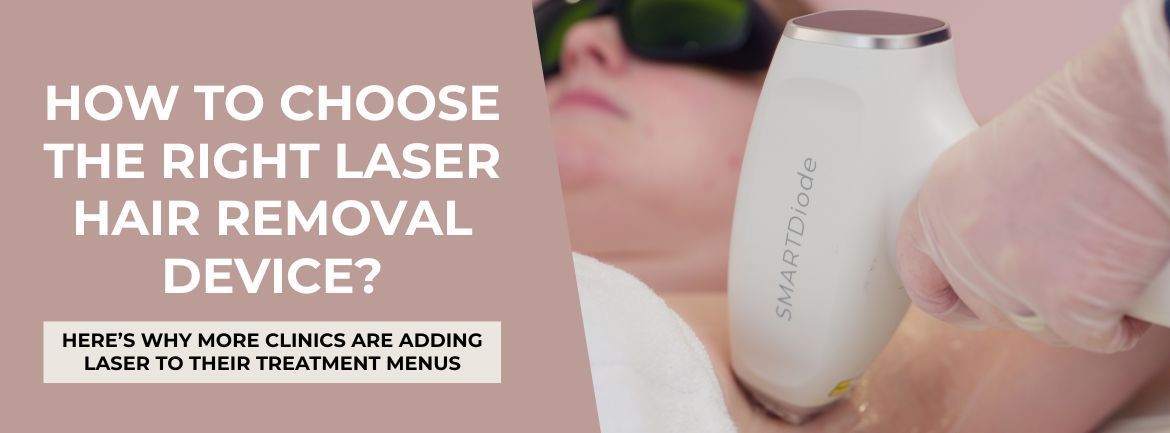
How To Choose the Right Laser Hair Removal

July 16, 2025


 Why Laser Hair Removal Remains One of the Smartest

Moves for Ambitious Clinics in 2025

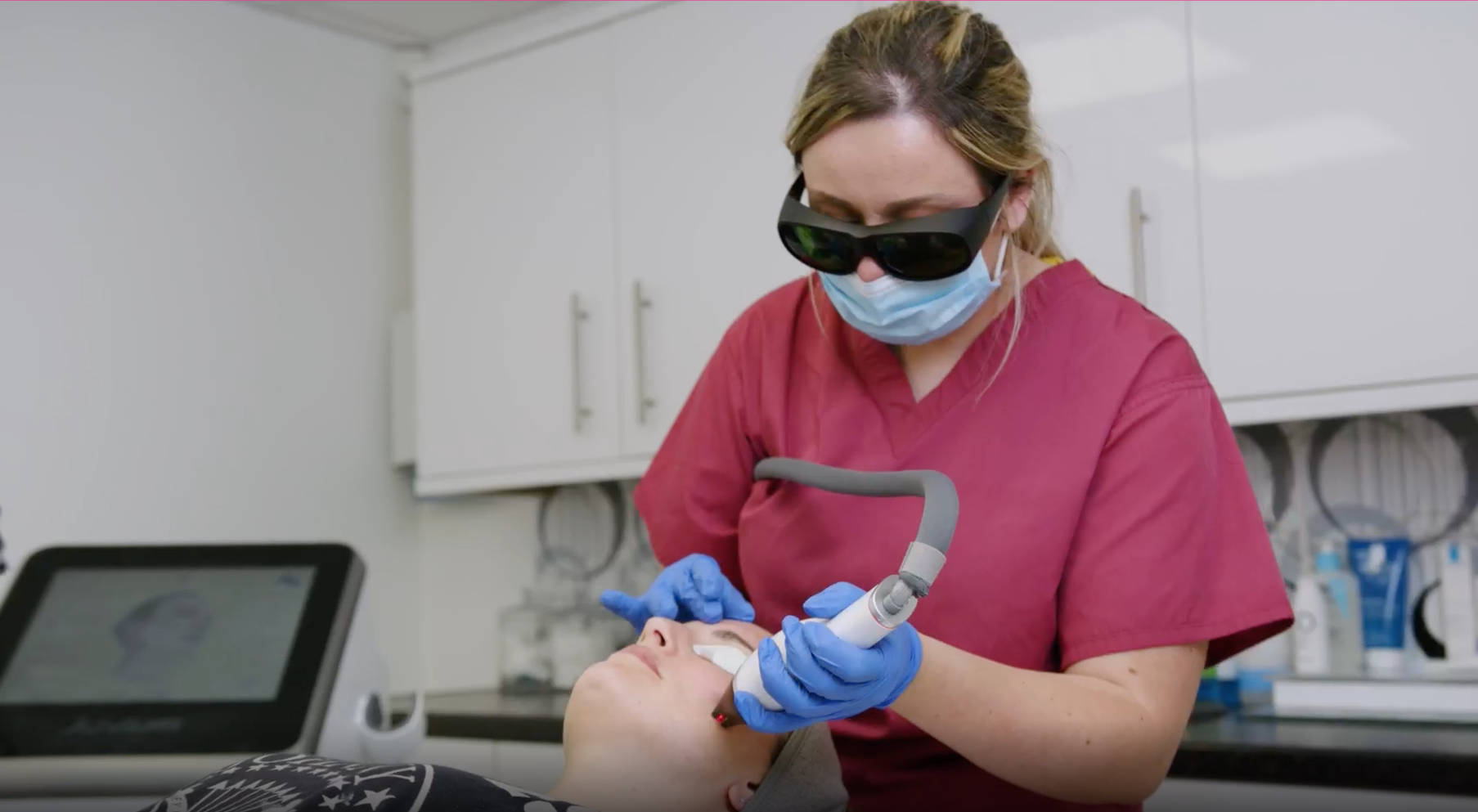
In the ever-evolving world of aesthetic treatments, there’s one service that continues to prove itself not just as a trend, but as a strategic business decision: laser hair removal.


At a time when client expectations are rising, competition is fierce, and profitability needs to be as consistent as your results, laser hair removal stands tall as a treatment that delivers on every front.


But with so many devices and options on the market, how do you know which one is worth your investment?


Let’s break it down.


The Rise (and Rise) of Laser Hair Removal


While new technologies come and go, laser hair removal has quietly become one of the most requested and retained treatments in the UK aesthetics space.


And it’s easy to see why.


It offers visible, lasting results. It appeals to a wide and diverse clientele. And most importantly, it generates repeat bookings and reliable revenue. According to market projections, the global laser hair removal industry is on track to exceed £4.5 billion by 2030. That’s not just growth, it’s momentum.


So, if your clinic hasn’t yet added laser hair removal or if you’re considering upgrading, there’s no better time than now.


Here’s why more clinics are adding laser to their treatment menus:


1. Predictable, Recurring Revenue

Laser hair removal typically requires a course of 6–8 sessions per area. That means clients commit to multiple visits up front, generating reliable, forward-booked income with very low consumable costs.


2. Wide Client Appeal

It’s a treatment that suits all ages, genders, and skin types (when using the right device). Whether it’s underarms, legs, face, or full-body packages, laser treatments are highly adaptable to each clinic’s audience.


3. Upsell Opportunities

Laser isn’t just a treatment, it’s an entry point. Clients who come for laser often stay for skin rejuvenation, facials, injectables, or body contouring, increasing their lifetime value.


4. High ROI, Low Overheads

When chosen wisely, a laser device can pay for itself within months. With no ongoing consumables, quick treatment times, and long-lasting client satisfaction, margins are some of the best in the industry.


In other words, laser isn’t just a service. It’s a business engine.


What to Look for in a Laser Hair Removal Device


• Diode or Triple Wavelength Technology

For safe, effective results across a wide range of skin types, Diode lasers (particularly those using Triple Wavelength Technology) are the modern gold standard.


This technology allows you to:

  • Treat all Fitzpatrick skin types, year-round
  • Target both fine and coarse hair at multiple follicle depths
  • Achieve consistent, long-term results with less risk of irritation

2. Treatment Speed & Spot Size

Time is money. A device with a larger spot size and high repetition rate means you can treat full body areas in a fraction of the time without compromising on results.


 3. Advanced Cooling for Comfort

Comfort isn’t a luxury, it’s a conversion tool. Clients are far more likely to complete their course (and recommend you to others) when their experience is as pleasant as their results.


4.  Support That Goes Beyond the Sale

A laser device is only as valuable as the support behind it. Look for a supplier that offers full clinical training, branded marketing content, and ongoing business support.


🔹 With The Smart Group, you get access to in-depth training, clinical protocols, branded marketing content, a Business Boost package to maximise your launch and a dedicated Business Development Manager to guide your growth.


5. Compliance & Certification

CE certification, insurance-ready documentation, and medical-grade build quality aren’t optional, they’re essential.
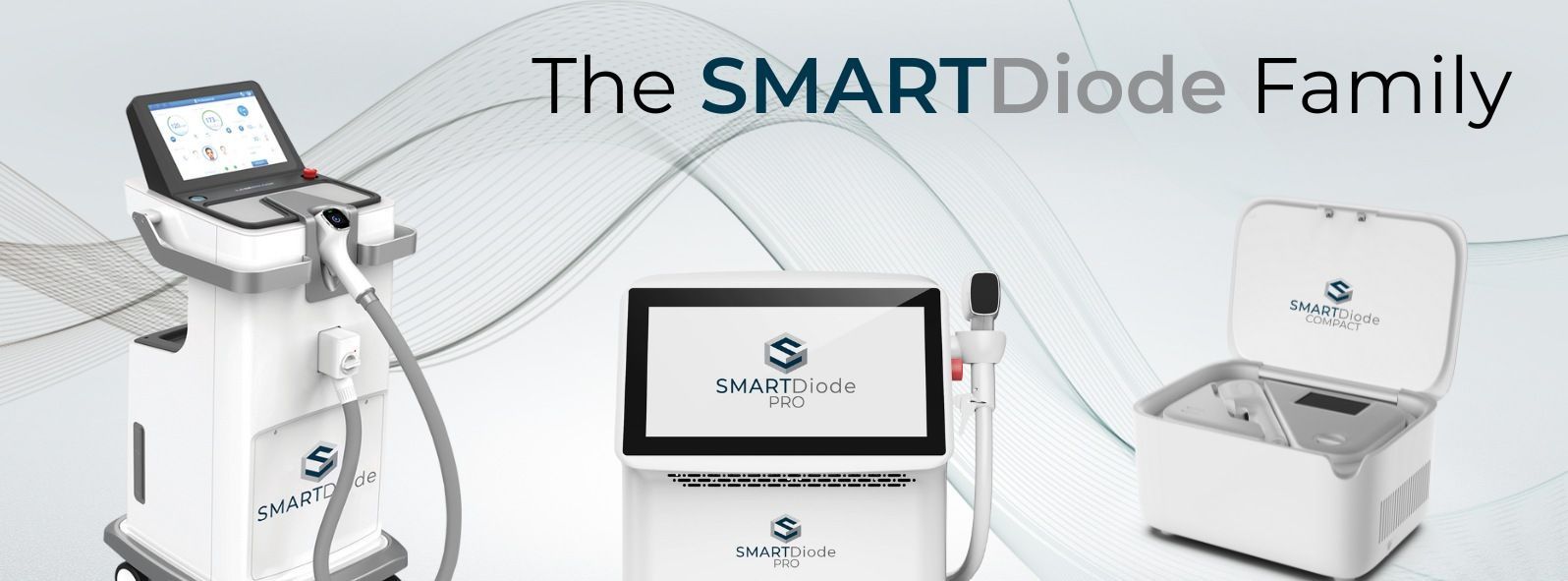
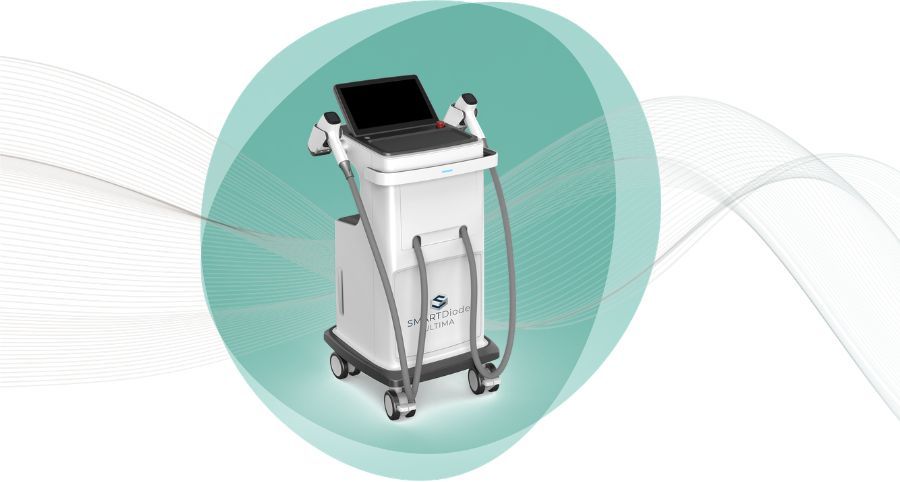
Meet the SMARTDiode Family: Built to Fit Every Business


Whether you're launching laser hair removal for the first time or upgrading from outdated technology, the SMARTDiode family is engineered to meet you where you are and grow with you.

With over 1 Million Treatments delivered since 2019, and 6 laser platforms to choose from, SMARTDiode fits any business size, from Harley Street medical clinics to freelancers and mobile business.

From compact, entry-level models to high-performance, triple-wavelength systems, each device in the range is built around clinical excellence, commercial impact, and complete practitioner confidence.


You’ll find:

  • Versatility across all skin types I-VI
  • Comfort-focused features your clients will love
  • Speed and efficiency to boost your bookings
  • And the kind of training and aftercare support that makes all the difference


SMARTDiode isn’t just a laser system, it’s a complete business tool designed to deliver outstanding results, loyal clients, and a return on investment that speaks for itself.

LEARN MORE ABOUT THE RANGE
By Dee Malan March 3, 2026
Skin Regeneration: The Cornerstone of Modern Beauty Over the last decade, the beauty industry has undergone a significant transformation. Once dominated by invasive procedures and surface-level solutions, today’s market is increasingly focused on skin regeneration — helping the skin repair, renew, and rebuild itself naturally. The science of skin renewal has existed for many years, but it is only in the last 10–15 years that these ideas have become part of everyday professional beauty treatments. Advances such as microneedling, LED light therapy, skin boosters and collagen-stimulating treatments have moved from specialist use into mainstream salon environments. What was once seen as advanced or medical is now part of modern beauty — focused on healthier skin, not just younger-looking skin. The Beauty Industry’s Evolution Fifteen years ago, beauty was largely defined by topical skincare, cosmetic coverage, and stronger anti-ageing treatments. Today, the industry sits at the crossroads of science, wellness, and technology. In 2025, the global skin rejuvenation market was valued at approximately USD 2.17 billion and is expected to exceed USD 5.2 billion by 2035, driven by growing demand for non-invasive, skin-renewing treatments. Alongside this, the non-invasive aesthetics market — including lasers, skin tightening, injectables, and advanced facial treatments — was valued at around USD 22.7 billion in 2025 and is forecast to grow beyond USD 43 billion by 2035. These figures highlight a clear shift: consumers are moving away from surgery and harsh procedures and toward treatments that work with the skin’s natural processes and require little to no downtime. Skin regeneration has become a foundation of modern beauty rather than a niche concept. Why Skin Regeneration Matters Now Several key forces are shaping today’s focus on skin regeneration: 1. Advances in Technology Today’s devices and products can safely encourage collagen production, improve skin renewal, and support healing without invasive procedures. LED therapy, gentle controlled treatments and bioactive ingredients have made regeneration more accessible, comfortable, and practical for salon use. 2. The Rise of Preventative Beauty Clients are starting treatments earlier — not to dramatically change their appearance, but to maintain and protect their skin over time. This shift toward prevention has made regenerative treatments more appealing than corrective ones. 3. Wellness and Skin Health Culture Beauty is now closely linked to overall wellbeing. Skin is seen as something to be supported and strengthened, not forced into change. Healthy skin is the new beauty goal. 4. Social Media and Visibility High-definition cameras, video calls and social media have increased awareness of skin texture, tone and quality. Clients want treatments that improve their skin naturally — without looking like they’ve “had work done.” From Quick Fixes to Smart Fixes Today’s beauty consumer is informed, busy and result-focused. They are asking: How soon can I get back to work? Will this hurt? When will I see results? Is this good for my skin long-term? This reflects a wider cultural shift toward instant results combined with comfort and convenience. People want effective treatments, but they also want them to fit into real life. Salons are seeing growing demand for treatments that improve the skin gradually and naturally, rather than aggressive changes. The trend is moving toward enhancing what you already have, instead of trying to completely alter it. What This Means for Salons For salon owners, this evolution creates both opportunity and responsibility. Clients are more knowledgeable and more selective than ever. They expect their beauty professional to understand: What a treatment does Why it is being recommended What results they can realistically expect How it supports long-term skin health Partnering with a supplier who understands today’s consumer — and who can provide regenerative solutions that are safe, comfortable, and proven — is key. Not just products and devices, but education, training and guidance. The Smart Group Difference At The Smart Group, one of our core beliefs is simple: we are consumer-led, not manufacturer-driven. We don’t follow trends just because they are new. We listen to what clients are asking for and then bring forward products, technologies and training that meet those needs responsibly. We believe: Skin regeneration should support long-term skin health, not just short-term results Treatments should be effective and comfortable Education and outcomes matter just as much as innovation This people-first mindset reflects the very changes shaping the beauty industry today. Looking Forward Skin regeneration is not a passing trend — it is the future of beauty. As technology and skin science continue to evolve, the salons that succeed will be those that focus on evidence-based, low-downtime, high-impact treatments. For salon owners, the question is no longer whether skin regeneration will shape the next decade of beauty — but how ready you are to be part of that future.
By Giulia Morabito February 26, 2025
JOIN US in ExCeL, London, this 2-3 MARCH 2025
By Giulia Morabito January 9, 2025
Bracknell, England — January 2nd, 2025
More Posts